
Quick Guide: What's in This Weather Guide?
Did you just check your weather app and see rain forecasted for every single day of your visit to Tenorio Volcano National Park? Take a deep breath. We are going to let you in on a little secret that only the locals know: the internet’s weather forecast is almost always wrong about our area.
Rio Celeste is located in a transition zone between the Caribbean slope and the Northern plains, creating a highly unique rainforest microclimate. To see that famous turquoise-blue waterfall at its absolute best, you need more than a generic weather app; you need local insight.
As local guides at Rio Celeste Aventuras, we have guided thousands of travelers through sunshine and downpours. Here is our definitive weather guide, based on years of hiking these trails every single day.
Understanding the Tenorio Volcano Microclimate
The Tenorio Volcano National Park acts as a massive natural barrier. Trade winds carry moisture from the Caribbean, which collides with the mountains. The result? A climate where the sun can be shining brightly in town, while a localized cloud dumps rain directly over the rainforest.
Because of this, we divide our year into two main seasons, but with important monthly variations you should know about.
| Months | Season | Avg. Temp | Trail Condition | Blue River Chance |
|---|---|---|---|---|
| Dec to Feb | Transition / Breezy | 22°C - 28°C | Firm, slightly humid | High (85%) |
| Mar & Apr | Dry (Summer) | 25°C - 32°C | Completely dry | Very High (95%) |
| May to Aug | Green (Short rains) | 24°C - 30°C | Moderate mud | High (75%) |
| Sep to Nov | Heavy Rain | 22°C - 28°C | Very muddy & slippery | Medium (50%) |
The Two Faces of Rio Celeste: Dry Season vs. Green Season
☀️ The Dry Season (March & April) – “The Safe Bet”
If your number one priority is seeing the intense blue river and snapping magazine-worthy photos without worrying about getting dirty, this is your best window.
Top Perks of the Dry Season
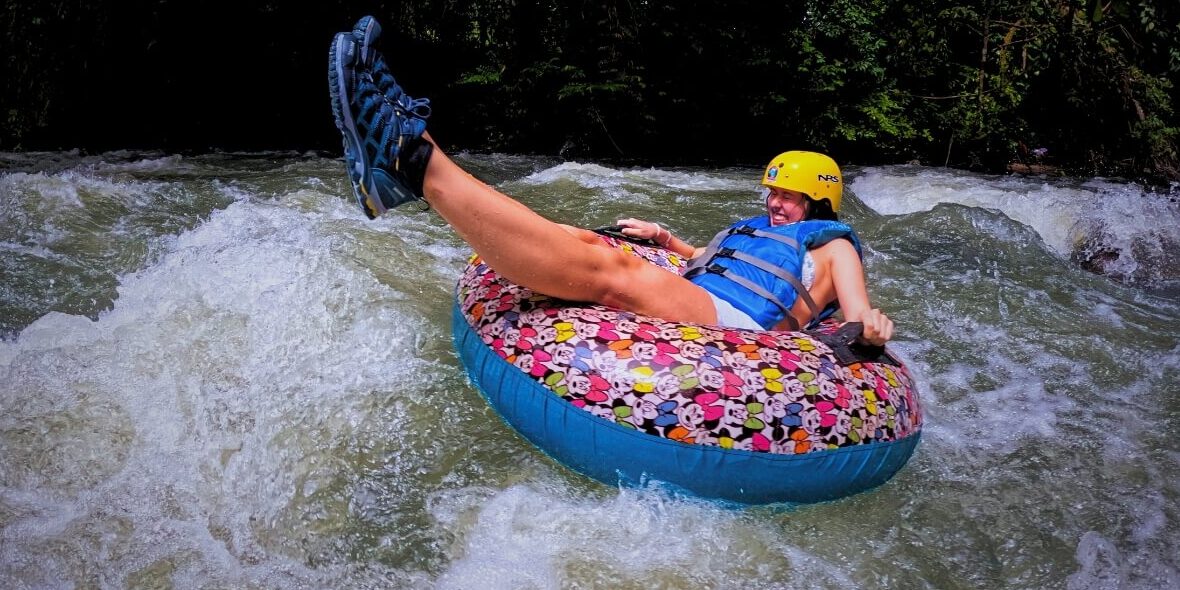
The hiking kilometers are much less demanding without the mud. Also, the river’s current is gentle, making it the ideal time to enjoy our Rio Celeste Tubing Tour, where you can relax and float down the crystal-clear waters in perfect weather.
Important Considerations
During these months, the temperature can easily exceed 30°C (86°F) and the humidity will make you sweat. When you exit the park (where swimming is strictly prohibited), you are going to want to cool off. Make sure to check our Rio Celeste Free Natural Pool Guide to find out exactly where it is legal and safe to swim nearby.
🌧️ The Green Season (May to November) – “The Real Adventure”
The rainy season in Costa Rica doesn’t mean non-stop gray days. Normally, we get gloriously sunny mornings followed by heavy downpours starting around 2:00 PM.
The Magic of the Rainforest
The jungle explodes with vibrant colors. Furthermore, the water volume increases, and the main waterfall crashes down with breathtaking power that you simply don’t see during the dry months.
Wildlife Spotting Under the Rain
Don’t let the rain discourage you; the moisture actually activates the jungle! Frogs, sloths, and tropical birds are much more active and easier to spot when the rainforest is lush and wet.
Trail Conditions & Considerations
The dirt trail turns into a mud track. If your goal is to see the main waterfall and the blue lagoon, you will need to hike inside the protected area—check out our Rio Celeste Waterfall Hike Guide to prepare for the muddy trail. And if the afternoon rain gets too intense, flying through our Rio Celeste Zipline Tour is the perfect backup activity, as the dense canopy of the giant trees protects you from the downpour while you soar.
The Science: Why Does Rain Turn the River Brown?
The Optical Illusion Explained
The Expert Fact: Rio Celeste’s color is NOT caused by chemicals; it is an optical phenomenon called Mie Scattering. At the specific point known as “Los Teñideros” (The Dyers), minerals (aluminosilicates) in the water increase in size, reflecting only the blue light from the sun.
What Happens During Heavy Storms?
When torrential storms hit, loose soil from the mountains washes down into the river. This excess sediment “breaks” the optical illusion, temporarily turning the water brown.
The Local 24-Hour Rule
The water flow in this area is incredibly fast. If an epic storm hits today at 4:00 PM and the river gets muddy, we usually only need one rain-free night for the sediment to wash away. By the next morning, the river has usually recovered its magical celeste blue.
The Survival Kit: What to Pack?
Essential Gear for the Trails
The weather changes in minutes in the rainforest. To stay comfortable and safe, this is what you must have in your backpack:
Footwear Recommendations
Forget sandals for the hike. Wear trail running shoes or hiking boots. If you visit during peak rainy season (September to November), renting rubber boots at the park entrance is the best $5 investment you can make.
Clothing and Protection
-
Quick-dry clothing: Avoid denim (jeans) at all costs. Wear lightweight athletic clothes.
-
Dry Bags: Vital for protecting your passport and phone from humidity or unexpected showers.
-
Lightweight rain jacket or poncho: This is much more practical than an umbrella, which will just get in the way on the narrow trails.
Trust the Locals, Not the Weather Apps
The true magic of Costa Rica is that the rainforest is beautiful precisely because it rains. Before you cancel your trip over a cloudy forecast, contact us. We read the mountain better than the satellites do.
If conditions inside the national park are not optimal, we will tell you honestly and guide you toward alternative routes. Plus, if you are driving, you can always check our La Fortuna to Rio Celeste Transport Guide to ensure your vehicle is the right fit for the road conditions.
Gear up, bring a good attitude, and let us show you paradise—no matter the season!
Is it better to visit Rio Celeste in the morning or the afternoon?
Is it better to visit Rio Celeste in the morning or the afternoon? Always aim for the morning, especially during the Green Season (May to November). In our rainforest microclimate, mornings are typically sunny, clear, and perfect for hiking. Heavy rains and thunderstorms usually roll in after 2:00 PM. Arriving right when the park opens (8:00 AM) helps you beat both the rain and the crowds.
My weather app shows "Thunderstorms" for every day of my trip. Should I cancel?
Please don’t! Generic weather apps are notoriously inaccurate for the Tenorio Volcano area because they cannot read our specific microclimate. They often interpret high jungle humidity as constant rain. We get plenty of sunshine year-round. Always check with [local guides] before making cancellation decisions based on an app.
Does the Tenorio Volcano National Park close when it rains?
The park remains open during normal rain. However, the park rangers will temporarily close the trails if there is an extreme weather event or a risk of flash flooding, which is for your safety. These closures are rare and usually don’t last long.
How long does it take for the river to turn blue again after a heavy storm?
Because the river flows so quickly, it flushes out mud very efficiently. If a massive afternoon storm turns the river brown today, it generally only takes one rain-free night for the sediment to settle. By 8:00 AM the next morning, the water is usually back to its famous turquoise blue.
Can I wear regular sneakers for the hike during the rainy season?
Do your Tubing and Zipline tours still operate if it rains?
Is the free natural swimming pool safe during the rainy season?
The current can become very strong after a heavy downpour, and the rocky banks get slippery. If it has been raining hard, you must be extremely cautious. We recommend reading our [Free Natural Pool Guide] to understand exactly how to access the water safely outside the park.