Table of Contents
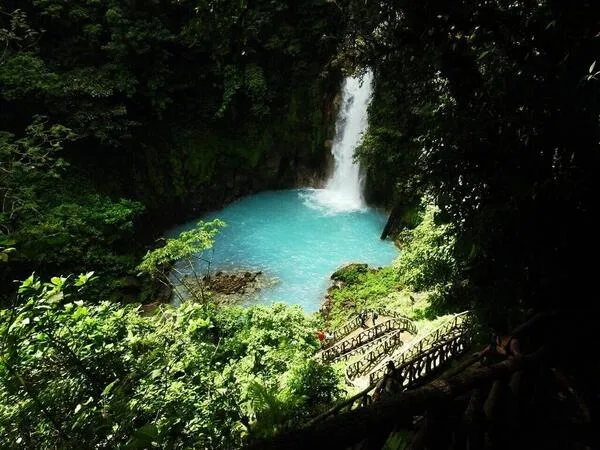
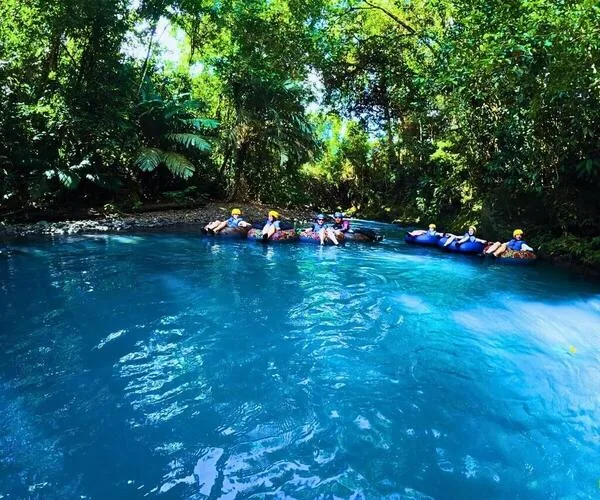
As you venture deep into the rainforest foothills of Tenorio Volcano, the jungle comes alive with birdsong, dripping ferns, and the distant rush of mountain streams. Suddenly, through the thick foliage, an impossible turquoise river emerges. Yet in this exact wilderness dwells one of the most enigmatic prehistoric mammals of the Americas: the endangered Baird's tapir. Welcome to Bijagua, globally celebrated as the Tapir Capital of the World.
Why Bijagua is the Tapir Capital of the World
Bijagua did not earn this worldwide renown by accident. Positioned directly between Tenorio Volcano National Park and Miravalles Volcano, this tranquil valley forms a vital biological migration corridor. Here, tapirs find:
- Abundant natural forage: wild figs, tender palm shoots, and nutrient-dense leaves.
- Clean freshwater streams, volcanic mud baths, and natural mineral licks.
- Dedicated community-led forest restoration, where former pastureland has been replanted into thriving primary and secondary jungle.
The Baird's Tapir: Silent Gardener of the Rainforest
Known scientifically as Tapirus bairdii (and locally as the danta), this gentle herbivore plays an irreplaceable ecological role:
- Mega-Seed Disperser: Tapirs consume large forest fruits and travel extensive distances, depositing seeds in rich organic compost to regenerate old-growth rainforest trees.
- Size & Strength: Weighing between 150 and 300 kg (330–660 lbs), the tapir is the largest native land mammal in Central America.
- Aquatic Experts: Excellent swimmers and divers, tapirs often submerge in lagoons to cool down and escape predators like jaguars.
Can You Spot Tapirs at Río Celeste?
While Tenorio Volcano National Park is prime tapir habitat, seeing one along the high-traffic tourist trails during daytime is rare. Tapirs are primarily crepuscular and nocturnal, quietly avoiding human foot traffic. Visitors frequently spot three-toed footprint tracks in river mud. To dramatically increase your chances of seeing a live tapir, book a specialized night safari or visit dedicated private reserves in Bijagua.
Visiting Tapir Valley Nature Reserve
Founded on community conservation and scientific research, the private Tapir Valley Nature Reserve is Costa Rica's premier sanctuary for ethical tapir observation. Guided tours led by local naturalist spotters utilize night-vision scopes and quiet forest hides overlooking natural lagoons, allowing guests to witness tapirs feeding in their natural habitat without disturbance.
Practical Travel Logistics & Best Seasons
- Location: Bijagua is located 1.5 hours from Liberia Airport (LIR) and 3.5 hours from San José (SJO).
- Best Timing: Night tours typically run from 5:30 PM to 8:30 PM. Rain gear, rubber boots, and dark clothing are essential.
- Weather: During periods of heavy tropical rainfall, national park trails get muddy and river colors may temporarily soften; dry mornings from January through April offer the clearest skies.
Community Conservation & Responsible Ecotourism
Choosing guided wildlife tours in Bijagua directly finances local reforestation, camera-trap research, and anti-poaching initiatives. When you explore this valley, you become an active partner in protecting Latin America's most iconic forest guardian.
Want to experience this adventure firsthand?
Book directly with our native local guides of Rio Celeste.
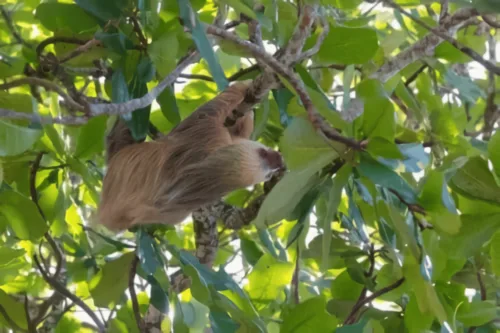
rio celeste sloth sanctuary Ticket and Guide
rio celeste sloth sanctuary Ticket and Guide
Explore Rio Celeste in Person
Book directly with our native local guides. Free cancellation up to 24h prior.
Related Articles
The Ultimate 10-Day Northern Costa Rica Itinerary: Volcanoes & Blue Rivers

LIR vs SJO: Which Airport is Better to Reach Rio Celeste?