Table of Contents
When birders plan an expedition to Costa Rica, famous names like Monteverde or the Osa Peninsula frequently dominate discussions. Yet experienced ornithologists know that true biodiversity hotspots occur along transitional ecological zones. Poised between the dry tropical forests of Guanacaste and the rain-soaked Caribbean foothills, the rainforests of Tenorio Volcano and Bijagua host over 380 species of birds. Here is your definitive birdwatching guide for 2026.
Why Tenorio & Bijagua are World-Class Birding Hubs
Bijagua's microclimate creates a biological crossroads where Caribbean and Pacific species overlap. Undisturbed primary forests, organic cacao farms, and riverbanks along Río Celeste provide abundant fruit, insects, and nectar, allowing birders to log rare targets within a single morning.
The Tenorio Bird Library: Top Must-See Species
- The Tody Motmot (Hylomanes momotula): The rarest and smallest member of the motmot family. Bijagua is recognized globally as one of the most reliable places on Earth to spot this tiny, elusive emerald bird perched quietly on lower forest branches.
- Keel-Billed Toucan (Ramphastos sulfuratus): With its multicolored bill and bright yellow throat, this iconic rainforest canopy resident is frequently heard calling across the treetops at sunrise.
- Sunbittern (Eurypyga helias): A slender river bird that stalks rocky blue shallows. When taking flight, it unfurls breathtaking sunburst patterns of crimson, gold, and obsidian on its wings.
- Snowcap Hummingbird (Microchera albocoronata): A prized target among photographers. Males sport deep velvety-purple bodies crowned with an intensely luminous snowy-white cap.
- White Hawk (Pseudastur albicollis): A magnificent pristine raptor that soars above the rainforest canopy hunting reptiles.
- Lattice-tailed Trogon (Trogon clathratus): A Caribbean foothill specialty with iridescent green plumage and fine barred tail markings.
Best Birdwatching Trails & Private Hotspots
- Tenorio Volcano National Park Trails: Excellent for mixed feeding flocks, woodcreepers, antbirds, and canopy raptors along primary rainforest paths.
- Bijagua River Corridors & Heliconia Trails: Ideal for hummingbirds, manakins, tanagers, and honeycreepers feeding on tropical nectar.
- Cacao & Agroecological Farms: Secondary forest borders where toucans, motmots, and woodpeckers feed on ripening tropical fruits.
Field Tips: Gear, Optics & Peak Morning Hours
- Start at 5:30 AM: Forest bird activity peaks during the first two hours after dawn before the tropical heat rises.
- Recommended Optics: 8x42 or 10x42 binoculars with high light transmission to penetrate dense understory shadows.
- Silica Packs & Moisture Protection: High humidity requires dry bags for camera gear and binoculars.
Booking Guided Birding Tours with Local Naturalists
Hiring a certified local spotter equipped with high-magnification Swarovski spotting scopes dramatically increases your species count. Local guides know subtle calls and hidden fruiting trees that unguided visitors easily walk past.
Want to experience this adventure firsthand?
Book directly with our native local guides of Rio Celeste.
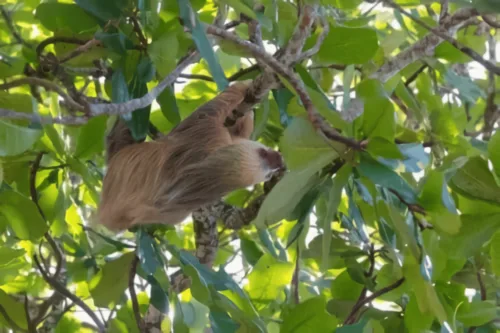
rio celeste sloth sanctuary Ticket and Guide
rio celeste sloth sanctuary Ticket and Guide
Explore Rio Celeste in Person
Book directly with our native local guides. Free cancellation up to 24h prior.
Related Articles

The Ultimate 10-Day Northern Costa Rica Itinerary: Volcanoes & Blue Rivers

LIR vs SJO: Which Airport is Better to Reach Rio Celeste?