
Table of Contents
Did you just check your weather app and see rain forecasted for every single day of your visit to Tenorio Volcano National Park? Take a deep breath. We are going to let you in on a little secret that only the locals know: the internet's weather forecast is almost always wrong about our area. Rio Celeste is located in a transition zone between the Caribbean slope and the Northern plains, creating a highly unique rainforest microclimate. To experience the famous turquoise-blue waterfall at its absolute best, you need more than a generic weather app—you need local insight from the guides who hike these trails every single day.
Understanding the Tenorio Volcano Microclimate
Tenorio Volcano National Park acts as a massive natural atmospheric barrier. Caribbean trade winds carry rich ocean moisture inland, colliding directly with the volcanic ridge. The result is a dynamic microclimate where the sun can shine brightly in town while localized clouds release refreshing rain over the mountain slopes.
Because of this, we divide our year into distinct seasonal cycles with unique trail and river conditions you should know before visiting:
The Two Faces of Rio Celeste: Dry Season vs. Green Season
☀️ The Dry Season (March & April) – The Safe Bet
If your top priority is admiring the intense turquoise water and snapping magazine-worthy photos without worrying about mud on your shoes, this is your optimal travel window.
- Top Perks: Hiking trails are dry, firm, and require significantly less physical exertion. Furthermore, river currents remain gentle and clear, making it the perfect season for our Rio Celeste Tubing Tour, where you can peacefully float down crystal waters in sunny weather.
- Important Considerations: Midday temperatures frequently exceed 30°C (86°F) and jungle humidity accelerates sweating. Because swimming inside Tenorio Volcano National Park is strictly illegal to protect water chemistry, plan to cool off outside the park at the legal and safe free natural river pools nearby.
🌧️ The Green Season (May to November) – The Real Rainforest Adventure
The rainy season in Costa Rica rarely means relentless gray days. In our microclimate, mornings are typically sunny and clear, followed by tropical downpours starting around 2:00 PM.
- Rainforest Magic: Tropical vegetation explodes into vibrant emerald greens. Water volume multiplies, and the thundering Rio Celeste Waterfall crashes into the basin with raw, breathtaking power rarely seen during dry months.
- Prime Wildlife Spotting: Don't let rain deter you—moisture activates the rainforest! Red-eyed tree frogs, glass frogs, two-toed sloths, and exotic birds become far more active and vocal when the jungle is wet.
- Trail Realities & Backup Plans: Dirt paths turn into mud tracks requiring good trail boots. If afternoon rain sets in, soaring through our Rio Celeste Zipline Tour is the perfect backup adventure, as the dense multi-tiered canopy of ancient trees shelters you from downpours as you glide above the forest floor.
The Science: Why Does Rain Turn the River Brown?
The Optical Illusion Explained: Rio Celeste's sky-blue tint is not caused by chemicals, copper, or artificial dyes. It is a natural physical optical phenomenon known as Mie Scattering. At the exact confluence known as Los Teñideros, aluminosilicate minerals suspended in two clear streams collide and expand in particle diameter, reflecting sunlight strictly in the cyan and sky-blue wavelengths.
What Happens During Heavy Storms? When torrential mountain rain washes loose volcanic topsoil into the riverbed, the heavy concentration of mud and silt particles scatters and absorbs light unevenly, temporarily overriding the optical scattering and turning the river brown.
The Survival Kit: What to Pack for Rainforest Weather
Microclimate conditions shift in minutes. To stay dry, safe, and comfortable on the trails, pack these essentials:
- Proper Footwear: Leave flat sneakers and casual sandals behind. Wear trail-running shoes or waterproof hiking boots with aggressive rubber tread. During peak rainy months (September to November), renting rubber boots for $5 at the national park entrance is the smartest investment you can make.
- Quick-Dry Technical Clothing: Avoid cotton and denim jeans at all costs; they retain moisture and chafe when soaked. Choose lightweight, moisture-wicking synthetic shirts and athletic shorts or hiking pants.
- Waterproof Dry Bags: Essential for safeguarding passports, cell phones, camera equipment, and car keys from humidity and sudden cloudbursts.
- Breathable Rain Jacket or Poncho: Far more practical than umbrellas, which get snagged in foliage and occupy your hands along narrow, rocky staircases.
Trust the Locals, Not Generic Weather Apps
The true wonder of Costa Rica is that the rainforest is lush and magnificent precisely because it rains. Before you cancel your excursion over a gloomy internet forecast, reach out to our team at Rio Celeste Aventuras. We read the mountain winds and river levels far more accurately than weather satellites.
If trail conditions inside the national park are temporarily unfavorable, we will provide honest updates and guide you toward excellent alternative activities like river tubing, sloth sanctuaries, or rural chocolate and coffee tours.
Frequently Asked Questions (FAQs)
❓ Is it better to visit Rio Celeste in the morning or the afternoon?
Always prioritize the morning, particularly during the Green Season (May to November). In our rainforest microclimate, mornings are consistently clearer and sunnier. Tropical showers typically develop after 2:00 PM. Entering right when the park gates open at 8:00 AM guarantees cooler temperatures, better light for photography, and minimal trail crowds.
❓ My weather app shows "Thunderstorms" every day of my trip. Should I cancel?
Please do not cancel! Weather applications calculate regional percentages for wide geographic zones and interpret ambient rainforest humidity as constant rain. Northern Costa Rica receives generous daily sunshine throughout the year. Always verify with local guides on the ground before making travel decisions.
❓ Does Tenorio Volcano National Park close when it rains?
No, the park remains open during normal tropical rainfall. Park rangers only close trails temporarily during rare severe weather emergencies or localized flash flood risks to guarantee visitor safety.
❓ How long does it take for the river to turn blue again after a heavy storm?
Thanks to the river's swift volcanic gradient, sediment flushes out quickly. A heavy afternoon rain that turns the water brown typically clears up after a single dry night. By 8:00 AM the next morning, the radiant celestial blue has usually returned.
❓ Can I wear regular sneakers for the hike during the rainy season?
We strongly advise against it. Regular running shoes have smooth soles that slip easily on wet tree roots and clay slopes. They will also get soaked and ruined by mud. Choose trail running shoes, hiking boots, or rent rubber boots at the entrance for just $5.
❓ Do your Tubing and Zipline tours still operate if it rains?
Yes! Both tubing and canopy zipline tours operate smoothly in light to moderate rain. Tubing through warm tropical rain is exhilarating, and the dense primary forest canopy acts as a natural umbrella during zipline flights. Tours are only postponed during severe lightning or high river flood warnings.
❓ Is the free natural swimming pool safe during the rainy season?
River currents strengthen considerably after heavy downpours, and riverbanks become slippery. Exercise heightened caution after heavy rain and consult our free natural pool guide to locate safe, legal access points outside park borders.
Want to experience this adventure firsthand?
Book directly with our native local guides of Rio Celeste.
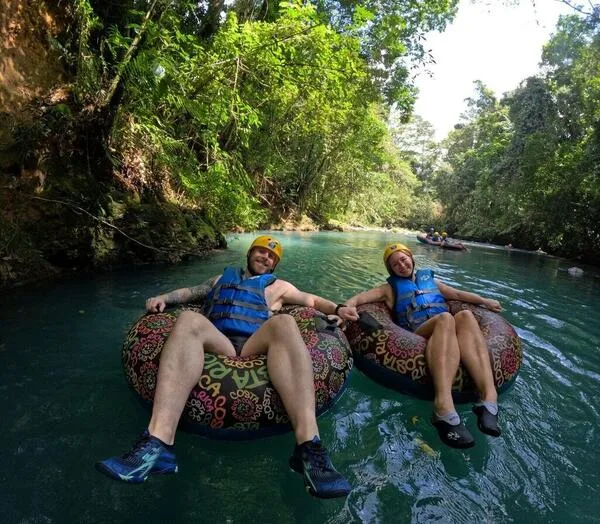
Rio Celeste 3-in-1 Combo: Hike, Tubing & Zipline (Lunch Included)
The ultimate eco-adventure: volcano hike, zipline canopy, authentic Costa Rican lunch, and river tubing.
Explore Rio Celeste in Person
Book directly with our native local guides. Free cancellation up to 24h prior.
Related Articles
The Ultimate 10-Day Northern Costa Rica Itinerary: Volcanoes & Blue Rivers

LIR vs SJO: Which Airport is Better to Reach Rio Celeste?